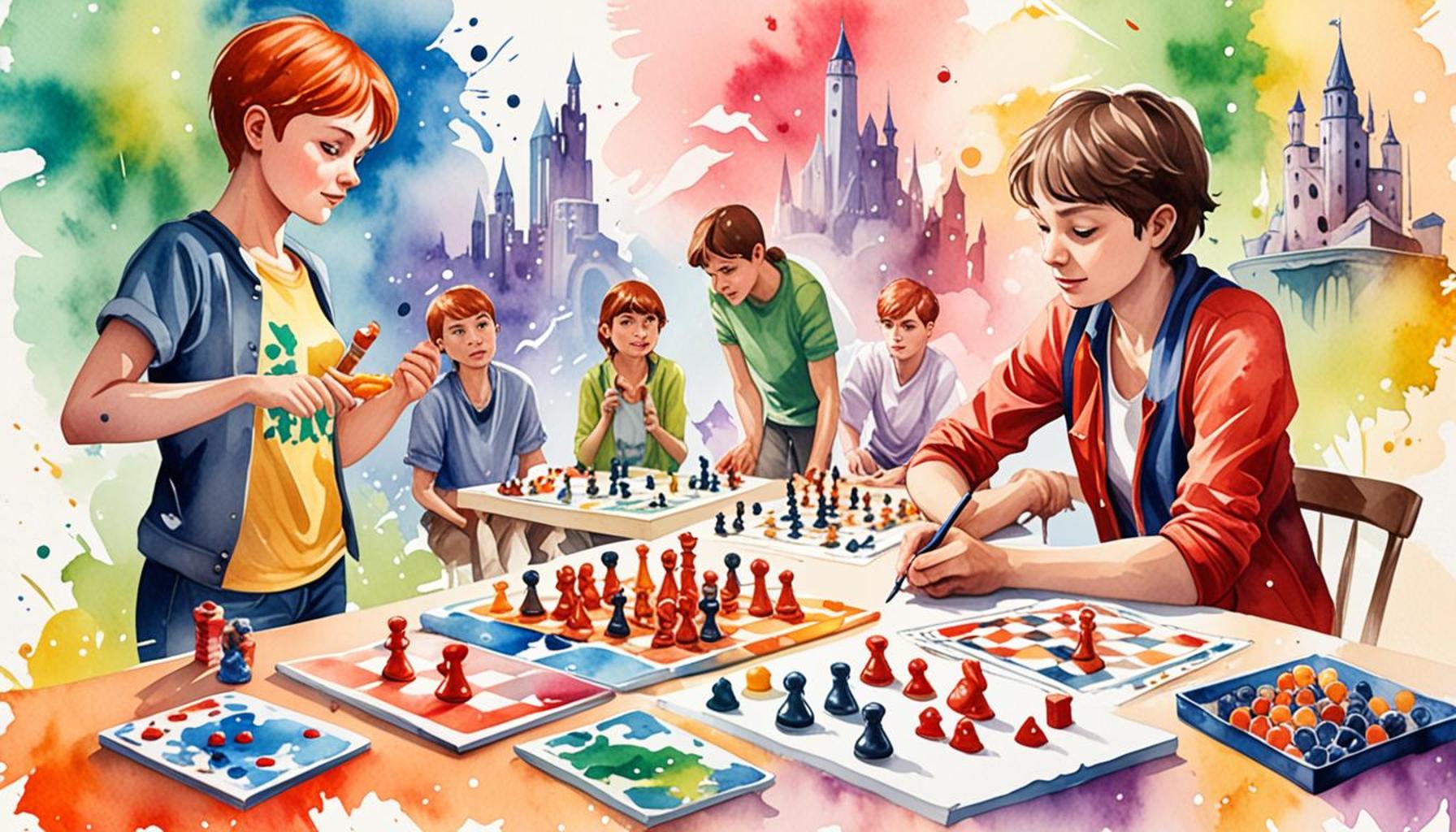
The Connection between Strategy Games and Complex Problem Solving

The Role of Cognitive Engagement in Strategy Games
In today’s fast-paced world, the need for effective problem-solving skills has never been more critical. Whether in business, personal life, or even education, understanding how our minds tackle challenging situations is essential. One fascinating avenue worth exploring is how playing strategy games can enhance our capacity to solve complex problems.
Strategy games are not merely a source of entertainment; they also foster a range of cognitive skills that are increasingly vital in our modern landscape. For instance, these games require players to engage in:
- Critical Thinking: Players analyze various scenarios and weigh potential outcomes, equipping them to make informed decisions in real life. A prime example is chess, where each move must be considered carefully, much like making a strategic business decision.
- Planning: Games often require players to formulate strategies that prioritize long-term achievements over immediate victories. This skill translates seamlessly into personal goal setting or project management in the workplace.
- Resource Management: Players learn to balance resources efficiently—be it finances in a board game or time in a video game—an essential aspect of everyday life in Nigeria, where resource allocation can often be a challenge for many families.
In Nigeria, strategy games like chess and local card games such as “Damii” or “Whot” are deeply embedded in cultural practices. These games serve not only as recreational activities but also as tools for cognitive development, encouraging youth to engage in healthy competition while honing their analytical skills. The question arises: can these classic games create a bridge to enhance complex problem-solving skills in everyday life?
Furthermore, research has revealed that individuals who engage regularly in strategic gameplay often exhibit enhanced capacities in several areas:
- Adaptation: These players often demonstrate the ability to adjust swiftly to new challenges, a skill crucial in today’s ever-changing job market.
- Teamwork: Many strategy games involve collaboration, teaching players the importance of working effectively with others—a vital lifeskill in both personal and professional realms.
- Persistence: Engaging in strategy games helps cultivate a mindset of resilience, encouraging individuals to tackle problems without yielding to frustration. This persistence can be particularly beneficial in academic settings, where challenges are abundant.
As we delve deeper into the connection between strategy games and complex problem solving, we uncover not only the intricate mechanics behind these games but also their profound implications on our daily lives. Engaging in these activities can pave the way for improved cognitive function, fostering a generation that is better equipped to navigate life’s complexities.
So, the next time you pick up a chessboard or gather around for a card game, consider the broader implications of these engaging activities—perhaps they are not just games, but platforms for developing essential life skills in the vibrant context of Nigerian society.
RECOMMENDED: Check out this similar article
Understanding Cognitive Skills Through Strategy Games
To grasp the connection between strategy games and complex problem solving, it’s essential to dissect the cognitive skills these games amplify. Strategy games, which encompass a broad spectrum from traditional board games to modern video games, present unique challenges that require players to think critically and act decisively. These games force players to process information rapidly, evaluate options, and project future scenarios—skills that align closely with effective problem-solving in real life.
One clear aspect of strategy games is their ability to engage players intellectually. For instance, when participating in a game of chess, players must not only consider their moves but also anticipate their opponent’s strategies. This level of strategic foresight encourages analytical thinking, enabling individuals to break down complex problems into manageable parts. Similar principles can be applied in various sectors in Nigeria, where analyzing trends and outcomes can lead to better decision-making in business, governance, and community planning.
Moreover, the dynamic nature of these games offers players the opportunity to develop a toolkit of problem-solving strategies. Here are some key skills honed through regular engagement in strategy games:
- Creative Problem Solving: Players often encounter unexpected hurdles, necessitating innovative solutions. The ability to think outside the box is invaluable in both personal and professional contexts.
- Risk Assessment: Engaging in strategy games teaches players to evaluate risks versus rewards, a crucial skill in making informed decisions about investments, career choices, and even day-to-day activities.
- Long-Term Thinking: Players frequently need to plan several moves ahead, mirroring the need for foresight in business strategy or personal life planning. The practice of aligning short-term actions with long-term goals can foster a more deliberate approach to one’s life choices.
In Nigeria, where entrepreneurship plays a significant role in economic development, the skills gained through strategy games can have profound implications. As many young individuals seek to establish their own businesses, the ability to assess market conditions, strategize effectively, and adapt to changing circumstances is paramount. Games such as “Ludu” or even modern online strategy games can serve as practical training grounds for these aspiring entrepreneurs.
Furthermore, studies have shown that participants in strategy games are often more adept at remaining calm under pressure and making quick decisions—traits that are beneficial in high-stakes environments such as finance, emergency response, and public administration. As Nigeria continues to navigate its complex socio-economic landscape, fostering these skills through games may be a pragmatic approach to enhancing problem-solving capabilities across the board.
Thus, it becomes evident that strategy games are more than mere pastimes; they represent an avenue for cultivating a new generation of analytical thinkers and problem solvers, capable of tackling the intricate challenges facing Nigeria today. Engaging in these activities can not only enhance personal skills but also contribute to the broader growth of society as a whole.
| Advantages of Strategy Games | Complex Problem Solving Skills |
|---|---|
| Improved Decision Making | Players assess situations and make rapid decisions based on available information. |
| Enhanced Strategic Thinking | Engaging in long-term planning and evaluating potential outcomes becomes second nature. |
| Collaboration Skills | Working in teams fosters communication and collaborative problem-solving techniques. |
| Stress Management | Players learn to remain calm under pressure, enabling clearer thinking in challenging environments. |
Engaging in strategy games not only entertains but significantly enhances cognitive skills related to complex problem solving. Players are often thrust into scenarios requiring robust decision-making capabilities, where each choice can dictate the success of their strategy. Furthermore, through recurring gameplay, one can see a clear evolution in the ability to think strategically. By consistently evaluating various outcomes and adjusting tactics, players refine their mental processes. These games often involve teamwork, making collaboration a pivotal element; thus, players enhance their communication skills and ability to work in a team setting. The added challenge of managing stress during competitive scenarios also prepares individuals to tackle high-pressure situations in real life, reinforcing their skills in keeping focused and composed while solving complex issues. Overall, the direct relationship between strategy games and the enhancement of problem-solving abilities warrants further exploration and understanding.
ADDITIONAL INSIGHTS: Expand your understanding here
The Impact of Strategy Games on Teamwork and Communication Skills
Beyond individual cognitive development, strategy games also play a significant role in enhancing teamwork and communication skills, essential components in effective problem-solving. Many strategy games require players to work collaboratively to overcome obstacles, making them a natural platform for the development of social skills and collective reasoning. For instance, team-based games like “League of Legends” or cooperative board games like “Pandemic” necessitate constant communication, resource sharing, and joint strategizing, valuable tools in any collaborative environment, be it in corporate settings, academic projects, or community initiatives.
In Nigeria, teamwork is often pivotal in driving social change, be it through community organizing or collaborative business ventures. The skills gained through engaging in strategic gameplay can mobilize youths, teaching them how to listen actively, articulate ideas, and negotiate differences. A recent study highlighted that individuals who engage in collaborative games tend to exhibit greater empathy and improved ability to address conflicts—a crucial element in Nigeria, where diverse groups often need to coexist and collaborate harmoniously.
- Effective Communication: Strategy games require players to express their thoughts clearly and concisely to their teammates, enhancing verbal and non-verbal communication skills. This proficiency translates into improved interpersonal relationships and clarity in expressing needs and wants.
- Delegation and Role Definition: Within a game, players often take on specific roles based on their strengths, a pattern that reflects the importance of understanding and leveraging individual skill sets in real-world environments. Such clarity in delegation can lead to enhanced efficiency in work and project execution.
- Conflict Resolution: Strategy games often create scenarios where disagreements may arise over tactical decisions. Learning to navigate and resolve these conflicts in a game context can empower players to tackle similar issues in their professional or social lives more effectively.
As Nigeria continues to evolve, fostering collaboration through strategic games could serve as a profound model for community engagement and development. For instance, local initiatives that employ games as a means for team-building exercises or conflict resolution workshops can be instrumental in teaching essential problem-solving skills to young people. Through these games, participants can develop a sense of responsibility, accountability, and a better understanding of group dynamics, which are critical as they take on roles in leadership and community service.
Research has further established that players who collaborate in strategy games often exhibit greater adaptability. In a world marked by rapid technological advancements and shifting socio-economic conditions, the ability to pivot and adjust strategies is invaluable. Nigeria’s vibrant tech scene, especially in hubs like Lagos and Abuja, can benefit from individuals who can adapt quickly to new tools, platforms, and business models—skills that can often be acquired through the engagement with strategy games.
Thus, integrating the lessons learned from strategy games into educational and professional contexts may not only reinforce essential cognitive skills but also promote a generation of problem-solvers who are adept in collaborative and dynamic environments. In recognizing the profound impact of these games, educators and leaders in Nigeria can tap into an underutilized resource that empowers the youth to overcome their challenges with confidence and creativity.
RECOMMENDED: Check out this similar article
Conclusion: Unlocking Potential Through Strategy Games
The intricate relationship between strategy games and complex problem-solving skills opens new avenues for personal and communal growth, particularly in diverse environments like Nigeria. As we have explored, these games are not merely sources of entertainment but rich platforms for enhancing critical thinking, adaptability, and collective reasoning. In engaging with strategy games, players cultivate a range of skills including effective communication, delegation, and conflict resolution, all of which are essential for navigating both personal and professional landscapes.
In a time when Nigeria faces multifaceted challenges, leveraging strategic gameplay can provide unique solutions for social development and collaboration. By fostering an environment where teamwork and shared objectives thrive, young individuals can emerge as empowered change-makers. This shift in perspective encourages us to consider how interactive learning and gaming can be integrated into educational frameworks and community initiatives, thereby nurturing a generation equipped for innovation and leadership.
Furthermore, the adaptability gained through strategic gaming prepares players to navigate an ever-evolving socio-economic landscape. As the Nigerian economy increasingly gravitates towards technology-driven solutions, skills honed from strategy games can enhance the capacity of individuals to embrace change and harness opportunities. Emphasizing this connection is not only timely but necessary; it challenges educators, community leaders, and policy-makers to recognize strategy games as vital tools in shaping the problem-solvers of tomorrow.
Thus, as we move forward, embracing the synergy between strategy games and complex problem-solving can lead to transformative experiences, equipping the youth with the tools required to build a brighter future for themselves and their communities.